Recycling and Sustainability for Garden Clearance Yeading
Garden clearance in Yeading is more than removing overgrown shrubs and decking: it is a commitment to creating an eco-friendly waste disposal area and a long-term, sustainable rubbish area for the local community. Our Yeading garden clearance approach focuses on reducing landfill, improving reuse and recycling, and supporting the circular economy in the boroughs that surround Yeading. Every job is an opportunity to recover materials, divert green waste to composting and mulch, and donate reusable items to local community groups.
Our recycling ambition and percentage target
We set a clear recycling percentage target for garden waste and mixed clearance material: a realistic but ambitious goal of 70% recycling and reuse of collected materials within three years of operation. That target covers green waste, timber, metal fixtures, paving materials, and items suitable for charity or community reuse. By aiming for 70%, garden waste clearance Yeading aims to outperform baseline municipal rates and contribute to a measurable reduction in local landfill volume.
Local transfer stations and boroughs' waste separation
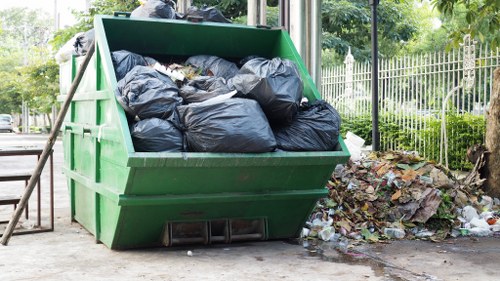
We coordinate closely with local transfer stations and community recycling centres maintained by nearby boroughs, including Hillingdon and neighbouring councils. Their kerbside separation schemes — such as separate bins for food waste, glass, paper, mixed recyclables and garden waste — inform how we sort items at source. Typical separation activities we support include:
- Segregation of green garden waste for composting and biomass
- Sorting wood and timber for chipping and reuse
- Separating metals and inert materials for transfer to licensed recycling facilities
We also maintain a localised map of transfer stations and civic amenity sites where larger volumes are processed, ensuring that materials from Yeading garden clearance jobs go to the correct sustainable streams rather than general waste. This reduces contamination and increases the proportion that can be recycled or recovered.
Partnerships with charities are central to a responsible clearance strategy. We actively collaborate with community organisations and national charities to redirect usable items — patio furniture, planters, timber in good condition, and containers — to people who can reuse them. These partnerships turn what might otherwise be rubbish into resources for community projects, allotments and social housing refurbishments.
 Charitable redistribution complements recycling: items that cannot be reused are assessed for material recovery. In practice, this means we prioritize donation first, resale second through vetted outlets, and only recycle or responsibly dispose of the remainder. That hierarchy ensures the lowest possible carbon footprint for each clearance job.
Low-carbon vans and vehicle strategy are integral to our sustainability plan. Our fleet includes hybrid and fully electric vehicles for urban jobs, with route optimisation software reducing empty miles and consolidating pickups to maximise load efficiency. By switching to low-emission transport and maximizing payloads, we estimate an operational emissions reduction of up to 40% compared to a diesel-only fleet.
When a Yeading garden clearance involves larger or specialist items, we use consolidated transfers to nearby processing hubs to further reduce journeys. The cumulative effect is a smaller carbon footprint per tonne of material handled, consistent with the sustainable rubbish area goals we set for the neighbourhood.
Responsible green waste management also includes on-site practices: using chippers to convert cut wood into mulch for parks and community gardens, turning leaves and small branches into compost, and stabilizing soil on-site where safe and appropriate. These methods reuse materials locally and support urban greening projects in the borough.
Transparency, reporting and continuous improvement
We report progress against the recycling percentage target through regular internal audits and documented transfer notes from authorised recycling centres. Tracking the flow of materials — from collection to final processing — ensures accountability and helps identify opportunities to improve reuse rates and reduce contamination. We also publish aggregated performance summaries for community groups and partners.
To make sustainable waste separation practical for residents, we promote clear segregation rules that mirror local borough schemes: paper and cardboard in one stream, containers and glass in another, food and garden waste in dedicated collections where available. This alignment makes it easier to integrate a Yeading garden clearance into the broader municipal infrastructure.
 We encourage local action through community drop-off events, organised collection days for bulky garden items, and training for householders on how to prepare materials for collection. These events increase the quality of recyclable loads and strengthen relationships with councils and volunteer groups.
Looking ahead: circular solutions for Yeading
Garden clearance Yeading is committed to building a resilient, low-impact model for waste management. By combining ambitious recycling percentage targets, strategic use of transfer stations, strong charity partnerships, and a low-carbon van fleet, we support a cleaner, greener neighbourhood. Together with residents, council schemes and community organisations, we aim to make sustainable rubbish areas the standard across Yeading and surrounding boroughs.